
1. What is air freight?
Air Cargo is a way to send goods between regions within a country or between countries using specialized aircraft, or can be carried in the belly compartment of a passenger plane.
Popular air freight services today are:
- Domestic air transport: This is the form of using specialized cargo aircraft (Cargo Aircraft or Freighter) or placing goods in the belly of a passenger aircraft (Passenger Plane) to transport packages from one area to another (within the same country).
- International air freight: It is the method of transporting goods from one country to another by cargo aircraft or accompanied by passenger aircraft.
- Air express delivery: Similar to the international air transport mentioned above, this is also a form of shipping goods by plane from one country to another, but the order completion time will be faster. Because the method only uses specialized shipping means, the speed of movement is high.
| Domestic shipping, choose Fast Delivery to ship your order now!
For domestic orders, although shop owners can choose air freight to shorten the time it takes to get the order to the destination, the process is generally quite complicated and the cost is quite high. At that time, the seller should consider an ideal alternative – choosing a reputable intra-city or inter-provincial delivery service by motorbike or truck , with fast delivery speed and economical freight rates . Giao Hang Nhanh (GHN) . Giao Hang Nhanh Company has many years of experience in the field of freight transport and has accompanied more than 100,000 shops, so it is committed to providing professional and reputable service quality. Specifically, trusting GHN, the shop is assured of service quality with the following outstanding advantages:
|
2. Advantages and disadvantages of air freight
Before deciding whether to transport goods by air or not, shop owners should clearly understand the advantages and disadvantages. Specifically:
2.1 Advantages
- Fast shipping time, can be delivered to the receiving point on the same day.
- High safety, low loss due to breakage or loss /theft and if loss occurs, there will be a transparent and reasonable compensation policy.
- Can send multiple packages to recipients at the same time, unlimited quantity.
- Suitable for transporting high value items .
- Cargo insurance premiums are lower than some other forms of transportation.
2.2 Limitations
- Air freight rates are quite high because they include a number of additional fees and airport service charges.
- It is mandatory to declare goods carefully, ensuring they are not on the airline’s prohibited list.
- The shipping procedure is more complicated than other popular forms of delivery.
- Flights may be rescheduled or cancelled due to unfavorable weather conditions.
3. What types of goods are allowed and not allowed to be transported by air?
To send goods by air smoothly, shop owners should clearly know the following list of goods that are allowed and not allowed to be transported:
3.1 Goods shipped
Types of goods legally transported by air are:
- Food, agricultural products (such as fresh food, fresh plants/flowers, medical products, pharmaceuticals…).
- High value goods (such as diamonds, gold, precious stones and other high value items).
- Industrial goods (such as machinery, electronic components, technological equipment and industrial products).
- Emergency goods (such as emergency medical supplies, medicines, vaccines…).

Air transport only accepts certain items such as food, agricultural products, high-value goods, etc.
3.2 Prohibited goods
Goods that are absolutely not sent by plane or any other means include:
- Prohibited substances (such as drugs, stimulants, gunpowder, etc.).
- Obscene cultural products (such as books, newspapers, movies, etc.)
- Goods of unknown origin.
- Living things.
- Items, publications or goods prohibited from being imported into our country.
- Precious metals or products made from precious metals or precious stones.
4. Basic air freight procedures
Below are the basic steps for air shipping for new shops to refer to:
- Step 1: Find service, sign contract.
After choosing a suitable air freight service, the seller and the service provider will discuss and sign a contract according to transparent regulations and terms regarding the method of transportation, fees, time, etc.
- Step 2: Receive Booking.
Once the contract is signed, the service provider will send the Booking form to the seller from the shipping unit (Forwarder). At this time, the shop should check the basic information such as departure airport, arrival airport, departure time, type of goods, quantity… to ensure the goods are delivered to the correct location.
- Step 3: Close the goods.
The shop owner learns the rules for packing goods carefully according to the airline’s regulations and writes the code on the package (as required by the importer). Then, the service provider comes to the shop to pick up the goods and transport them to the airport (or the Forwarder supports).
Here, the service provider and the Forwarder together confirm the shipment information and receive a Forwarder’s Certificate of Transport (FTC) to send back to the seller.
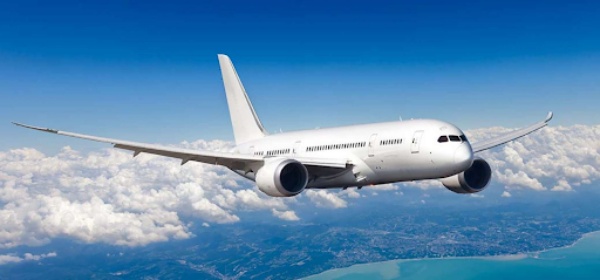
To successfully transport goods by plane, shop owners must ensure that all items are packaged properly.
- Step 4: Customs export procedures.
For easy air transport, the shop owner must complete export customs procedures and the Forwarder will perform this step. Once completed, the shipments are transported to the airport, accompanied by a full set of necessary documents before being loaded into the aircraft’s cargo hold.
- Step 5: Issue air waybill.
The airline, upon receipt of all documents as notified, issues MAWB – Master Air Waybill (master air waybill issued by the airline). Including 01 copy of AWB – Air Waybill (air waybill) sent with the shipment to the destination airport to be delivered to the responsible staff at the destination and the remaining documents are given to the Forwarder for safekeeping.
- Step 6: Receive documents via Email.
Once the shipment and documents have been transported, the Forwarder will send a scanned copy of the AWB and all other documents to the importer via Email.
- Step 7: Receive notification of arrival.
Before the plane lands, the airline agent will notify the Forwarder of the expected delivery time and the status of the goods transportation. At this time, to avoid unnecessary risks, the consignee must carefully check the necessary information such as the date of arrival, the place of storage, the remaining fees to be paid, etc.
- Step 8: Delivery order.
When the goods arrive, the Forwarder collects the original HAWB – House Air Waybill (house bill of lading issued by the forwarder) No. 2. Then pay the prescribed fees including delivery order fee (D/O), handling fee (Handling), labor fee (Labor fee)… and receives the delivery order (D/O).
- Step 9: Customs import procedures.
The air freight service provider or Forwarder completes the remaining import customs procedures. This helps the package leave the airport easily, convenient for the next shipping steps.
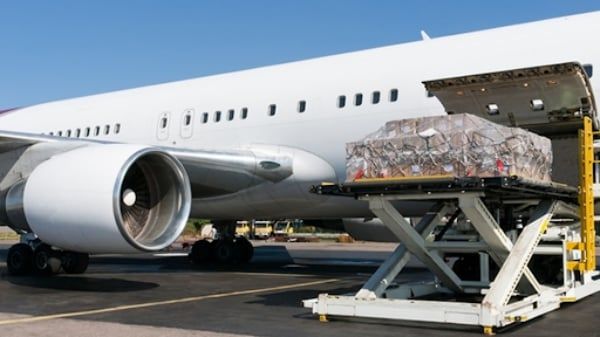
When the plane arrives at the destination airport, the service will help the shop complete the import procedures.
- Step 10: Receive goods.
The Forwarder Company continues to complete the procedures for receiving the goods as well as clearing the declaration and transporting them to the destination requested by the importer. At this point, the seller only needs to check the quantity and quality of the goods and sign the invoice to have successfully received the goods.
5. Some important notes when sending goods by air
In addition to the above information, shop owners should not forget to note the necessary notes below to ensure quick customs clearance and early receipt of goods:
- Comply with all legal regulations on goods:
When arranging and packing goods, sellers need to ensure that the product is not on the list of prohibited items under Vietnamese and international law or is not allowed to be transported by airlines. This is to limit the goods being held at the airport for a long time, or even destroyed, affecting the shop’s revenue.
- Provide full documentation confirming the necessary product origin:
Shops must check whether the product description is complete and accurate, and food should have additional safety inspection certificates. This will help airlines easily identify the origin of the goods, shortening customs clearance time.
- Ensuring product standards:
Each airline will have regulations on quantity, weight, size, packaging, etc. of each package. Therefore, sellers should carefully research information on the official website to ensure accurate implementation.
- Take careful note of delivery information:
Another important note when choosing an air freight service for a new shop is to carefully check the recipient’s information, including name, phone number, address… This will help avoid unwanted loss or damage during transportation.
- Understand customs clearance costs:
Although the shipping unit will assist the shop owner in consigning goods and handling customs procedures, if any problems arise, the seller must bear all costs and damages.
Hopefully, the above article has helped shops better understand the form of air transport so that they can make the most effective and cost-saving choice when to use it. It can be seen that, besides the advantages of delivery time, safety or compensation policy, this delivery method still has some disadvantages in terms of procedures, fees, etc., so sellers should learn and consider carefully before using it.